Market eligibility
Identify the Responsible Person and SCPN obligations
BUYER INTELLIGENCE / UNITED KINGDOM
A skincare range is not retail-ready merely because its bottles look beautiful. A purchasing team needs evidence that each SKU can be offered lawfully, replenished predictably, communicated accurately and priced sustainably. This editorial guide turns a supplier introduction into an auditable sourcing process for beauty chains, pharmacies, supermarkets, wholesalers and independent retailers.
Identify the Responsible Person and SCPN obligations
Match safety, INCI, claims and pack to each SKU
Approve barcode, artwork and shelf/transport format
Normalise currency, Incoterm and total costs
Verify restock, batch quality and escalation
| Decision gate | Evidence to request | Buyer action |
|---|---|---|
| UK market readiness | Named Responsible Person, safety documentation, SCPN responsibility | Mandatory before listing |
| Product and claims | Exact formula identity, label draft, substantiation and batch controls | Approve against SKU |
| Merchandising data | GTIN ownership, unit and carton dimensions, approved images | Verify before listing |
| Commercial quotation | Price basis, currency, Incoterm, MOQ by SKU, tooling and freight scope | Compare net landed cost |
| Continuity | Reorder lead-time procedure, quality response and replenishment plan | Review operating risk |
Start by asking what the supplier is actually proposing: an existing branded SKU, an exclusive format, a retailer-owned label, a modified base formula or a completely bespoke product. These routes create very different ownership, artwork, testing, contract and launch responsibilities. Insist on a named legal entity and an unambiguous explanation of the manufacturer's, brand owner's, importer’s and Responsible Person's roles.
The five first-gate questions are: What is being supplied and under which brand? Who is legally responsible in Great Britain? Which evidence is available for the exact finished formula and pack? How will replenishment be delivered and measured? What do the net commercial terms look like after logistics, retailer margin, promotions and potential returns? The most attractive unit quotation is not necessarily the lowest landed risk.
Branded wholesale means purchasing an existing brand's finished, market-appropriate stock. Private label places a retailer's brand on an agreed product concept and requires explicit agreement on formula ownership, claims, artwork approval, packaging procurement and relevant compliance roles. OEM usually means making to a buyer-defined specification; ODM involves varying degrees of supplier-led formulation and development. Labels differ by industry, so define the practical responsibilities in the contract rather than relying on a three-letter abbreviation.
Ask whether the supplier controls manufacturing directly or coordinates qualified third-party manufacturing. Neither arrangement alone proves or disproves capability. Request traceability, quality controls and documented escalation responsibilities for whichever entity actually makes and releases each batch.
For cosmetics supplied to consumers in Great Britain, the rules require a UK-established Responsible Person and safety-related information for each product, with notification to the UK's Submit Cosmetic Product Notification (SCPN) service where applicable. Buyers should ask who owns the notification, who can provide evidence of the safety assessment and Product Information File, where the compliance records are accessible and whether the agreed formula, labelling and packaging match the notified version.
The supplier's statement that an ingredient is permitted does not replace the assessment of the completed cosmetic product. Verify specific requirements against current official guidance, especially where there are particular ingredients, claims, children's products, nanomaterials or product types near the boundary of cosmetic regulation. Great Britain and Northern Ireland must not be treated as one interchangeable notification route.
A usable supplier pack should identify each product with its trading name, SKU, GTIN or proposed code, formula identity, INCI list, nominal quantity, proposed artwork, claim substantiation status, batch-traceability approach, technical specifications and relevant market documents. The evidence must correspond to the proposed finished product and packaging configuration, not to an unrelated product or generic factory capability statement.
Ask for a responsibility matrix with four columns: document or decision, supplier owner, buyer owner, and current status. Distinguish 'already available', 'under preparation', 'buyer to provide', 'third-party review required' and 'not applicable'. Never present a supplier's intended certification or an unreviewed illustration as an issued certificate or approved product label.
Retail packaging must survive handling as well as satisfy visual merchandising. Review primary-pack compatibility, closure performance, leak risk, carton dimensions, shelf presentation, tamper considerations, legibility, batch information and whether bilingual or multilingual label variants are needed. Request print-ready dielines and an approval workflow for regulatory copy before plates or cartons are committed.
A barcode image on a concept mock-up is not proof of a licensed, scannable identifier. Set the GTIN owner and code allocation in writing. For a listing decision, request actual sample packs, dimensions and an appropriate scanning/transport plan; a concept render should be called a concept. If a supplier does not currently dispatch samples, record that gap openly rather than claiming sample-based approval has already occurred.
Ask each bidder to quote on a consistent basis: currency, Incoterm and named place, product-unit pricing, secondary packaging, minimum order by SKU and total programme, tooling or artwork charges, testing expenses, freight assumptions, customs costs, storage, and any destination VAT treatment. Price comparisons become misleading when one quote covers a labelled finished unit and another excludes packaging, compliance work or delivery.
A useful scenario table compares a small initial launch, a normal reorder and an expanded product mix. For each case, model inventory cash commitment, freight efficiency, promotional support and expected sell-through rather than writing a generic 'high margin' claim. Manufacturer lead times and retailer payment terms must be validated with the counterparties; do not invent them from market averages.
Minimum quantities are not a proxy for reliability. Buyers should distinguish MOQ per SKU, packaging production MOQ, master-carton quantity, colour/print changeover effects and total order minimum. Agree which mix of products actually meets the threshold and whether private-label artwork creates extra minimums.
Ask for a basic supply continuity plan: planning lead time, capacity confirmation procedure, batch release controls, defect response process, forecast sharing, service-level definition and what happens if a key component is delayed. The first successful delivery is valuable, but a retail relationship is built on consistent availability and documented corrective action.
Create a weighted internal comparison with separate gates for legal readiness, evidence availability, quality, total landed economics, logistics and category fit. Legal readiness should be a threshold, not a category that can be compensated for by an unusually cheap quotation. A supplier that cannot identify the Responsible Person or provide current safety documentation should remain at qualification stage.
After regulatory eligibility, compare the completeness of the technical package, retailer-ready packaging, operational communication and realistic price assumptions. Weighting may differ between a discount beauty chain, pharmacy, supermarket and specialist independent retailer. Record the source and date for each score and mark missing evidence as pending, not as a pass.
An actionable request for quotation should include: destination market(s), distribution channels, brand ownership model, proposed product categories, exact pack sizes, fragrance constraints, desired INCI or exclusion list where relevant, expected volumes by SKU, target launch window, label languages, barcode owner, photography/artwork responsibilities, compliance-document owner, required order terms and replenishment assumptions.
Separate negotiable preferences from non-negotiable constraints. Ask each respondent to attach an exception schedule identifying what is not currently available and what additional testing, design or certification work would be chargeable. This makes offers easier to compare without falsely assuming that all manufacturers provide identical bundles.
Instead of filling shelves with ten unrelated products, construct a shopper mission: cleanse, tone where suitable, targeted serum, moisturise and sun protection. Evaluate consistency of labelling, naming, claims, routines and merchandising. A coherent line can support shelf navigation, but its commercial success must still be demonstrated with retailer-specific category insight rather than asserted.
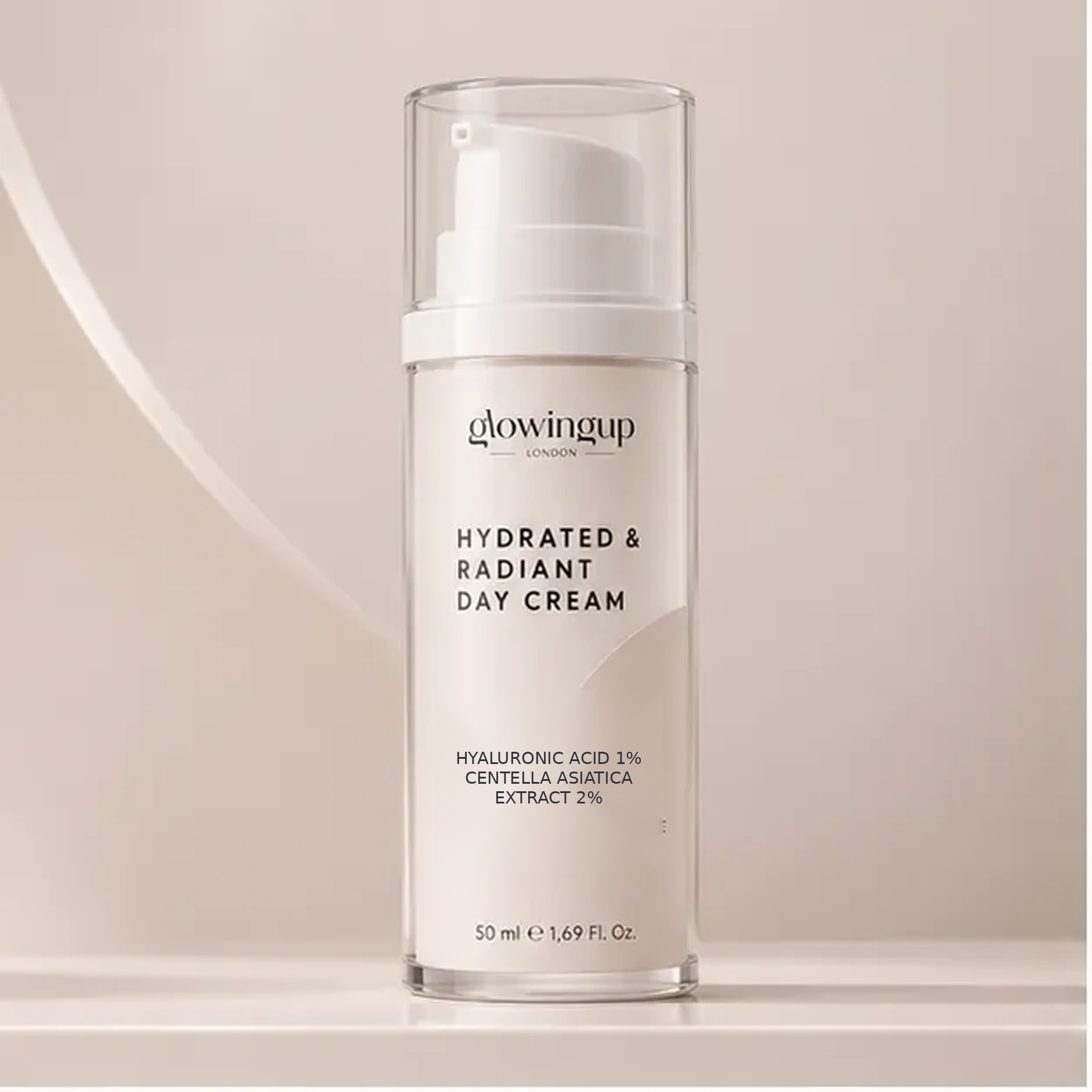
For Glowingup London's current concept collection, possible categories to evaluate include facial cleanser, toner, serums, day and night care, eye-area products and sun care. Images are conceptual and formulas, market-specific claims, actual supply, final packaging and compliant SPF statements require separate verification before commercial listing.
Watch for unverifiable certifications; generic 'EU/UK approved' marketing that cannot be mapped to a specific product; unexplained differences between label and INCI data; missing entity responsibility; no supplier capacity assumptions; quotes with absent currency or Incoterm; and product photographs implying approved SPF or efficacy claims not backed by appropriate evidence.
A practical escalation table has three classifications: blocking (cannot place on market or identify accountable party), conditional (can be addressed before artwork lock or order approval) and commercial (negotiable after legal eligibility). Document decisions and revisit them when the formula, pack, destination market or ownership arrangement changes.
Glowingup London can be approached about its branded skincare range, wholesale conversations and selected private-label project enquiries. Our published collection is an invitation to discuss potential programmes, not evidence that any named chain is already a partner or that every formula has market-specific clearance.
A buyer should request a written offer for the target market, identify exact SKU and volume requirements, and review documented formula, packaging, compliance and supply conditions before committing. No samples are currently promised on the public commercial model; any feasibility discussion must be explicit about what evidence can be shared and when.
Is a notification number equivalent to product approval? No: notification and independent evidence of safe, compliant finished products are separate concepts. Can a UK buyer rely automatically on EU notifications? No: Great Britain has a distinct notification pathway, while Northern Ireland has its own applicable arrangements. Can artwork alone be used to approve SPF? No: sun-protection claims require appropriate product-specific substantiation.
Can a retailer place its logo on a stock product without changing compliance responsibilities? Not automatically: brand ownership, relabelling and the role of the Responsible Person should be assessed for the actual arrangement. Do all chains use the same MOQ or listing fee? No; these are commercial terms to be agreed with the particular buyer.
Official references and further reading
GLOWINGUP LONDON / TRADE
Tell us your market, exact SKU needs and likely volumes; an enquiry is not a confirmed order.
Discuss your UK skincare sourcing brief ↗