Confirm the product
Match the exact SKU, formula, claims and proposed US market
BUYER INTELLIGENCE
A skincare product can be visually compelling yet still be unsuitable for a US retail purchase order. Importers and distributors must separate product identity from regulatory responsibilities, customs entry requirements, label decisions and transport economics. This independent buyer guide explains the questions to settle before comparing supplier quotations, including what the Modernization of Cosmetics Regulation Act of 2022 (MoCRA) does—and does not—establish.

Match the exact SKU, formula, claims and proposed US market
Identify label responsible person, facility and importer of record
Check MoCRA applicability, label, documentation and customs entry
Use a dated FCL quote, destination fees and HTS/origin-specific duties
Agree traceability, complaint handling, realistic replenishment and RFQ scope
| Decision gate | Request from supplier | Buyer action |
|---|---|---|
| Product identity | Final SKU, intended use, formula/INCI and actual sellable-unit artwork | Confirm cosmetic vs potentially drug-regulated claims |
| FDA obligations | Facility and listing status or documented exception; label responsible person | Check applicability per product and business |
| Safety and claims | Safety substantiation, relevant testing, warning and labeling review | Resolve issues before retail approval |
| Entry and customs | Importer of record, invoice, classification, manufacturing origin, broker and bond | Obtain a dated entry/tariff assessment |
| Ocean shipment | Port codes, 20GP/40GP/40HC, licensed quote, named carrier/sailing and fee inclusion | Compare only current like-for-like rates |
| Destination cost | Port/terminal fees, bond and filing, customs brokerage, chassis, trucking and risks | No final landed estimate while charges are unknown |
| Supply continuity | Carton data, GTIN, lot controls, complaints, recall contact, lead time | Confirm reorder readiness |
An importer should request the exact item description, formula identity, net quantity, intended use, target consumer, finished label and manufacturing location for every proposed SKU. Concept artwork is not proof that the finished unit is approved for sale. The buyer should compare what the supplier offers with what actually appears on a final container and in the proposed product listing. [8]
The intended claims matter as much as the ingredients. In the United States a product promoted for treating or preventing disease, or for certain effects on body structure or function, may be regulated as a drug rather than only a cosmetic. This category decision precedes ordinary beauty-retail planning; a supplier claiming that all skincare is automatically governed only by cosmetics rules should trigger a review.
Begin with a product-master record: working SKU, trade name, INCI or ingredient list, nominal content, formula version, expected consumer use, manufacturing site and country of manufacture, final consumer-facing artwork, outer-case quantity and intended distribution channel. Give every document the same revision identifier so the supplier cannot quote one formula while the importer checks a different label. A retailer may also need a product photograph approved for e-commerce, scannable GTIN and unit dimensions. Missing data should be marked pending, not guessed from an image.
Differentiate an ordinary cosmetic from a drug, a product with both cosmetic and drug uses, or another regulated article. For instance, an ordinary moisturising claim and a claim to treat eczema create different compliance questions. Claims about sun protection and acne treatment warrant particular scrutiny because they may trigger drug rules; no buyer should assume that a European cosmetic product file settles those issues for the US market. Record a product-classification decision and its reviewer before fixing the commercial label.
Buyer decision: can the supplier provide one internally consistent, final SKU record, with no drug-type claims accidentally embedded in marketing materials? If not, the next step is a controlled product-and-claims review, not an ocean freight booking. Consult FDA's Cosmetics & US Law and Importing Cosmetics guidance for the US classification and admissibility framework.
MoCRA uses the term responsible person for the manufacturer, packer or distributor whose name appears on the cosmetic label. That role should not automatically be treated as identical to the person or company making a US customs entry. A brand owner, Turkish producer, American importer and retail distributor may all participate while carrying different contractual and regulatory obligations. [1] [2] [3] [10]
Before negotiating exclusivity, document each organisation’s responsibilities for facility and product information, consumer adverse-event handling, safety records, label approval, returns, traceability and FDA communications. Ask who can provide a current authorized product dossier and who has the legal ability to recall affected lots if a safety concern arises.
FDA guidance says that owners or operators of cosmetic manufacturing or processing facilities generally must register applicable facilities and renew registration every two years. Responsible persons must list covered cosmetic products, subject to statutory conditions and exemptions. The rules include exemptions for certain qualifying small businesses, but there are exceptions to those exemptions for specified products and activities.
Ask the supplier which products, facilities and responsible persons are covered; whether an exemption is claimed; and what objective record supports that position. FDA explicitly states that it does not provide certificates of cosmetic facility registration or product listing compliance. A facility registration number or product listing number is not FDA approval of an individual product, its formulation or its claims.
Create a responsibility matrix with four columns: legal entity, activity, evidence, and escalation contact. Typical rows cover foreign manufacturing, product processing, name on the US label, product listing, safety-substantiation records, US importer of record and serious adverse-event reporting. Do not assume that a contract giving a distributor exclusive territory automatically transfers the statutory responsibilities of a responsible person or customs importer.
MoCRA does not make every importer obtain an FDA registration number merely because it imports cosmetics. FDA separately explains that firms importing products considered solely cosmetics are not required to register as importers with FDA. This must not be confused with a potentially applicable manufacturing/processing facility registration duty or responsible-person product listing. Request the relevant basis for the actual operation, and never advertise a universal 'FDA certificate'.
A practical buyer review has three outcomes: evidence supplied and scope matched; exemption claimed with documented legal basis; or unresolved. The small-business exemption is not a blanket waiver of all MoCRA obligations and is subject to statutory exceptions for certain products. Check the FDA's current registration/listing material, including whether the site performs activities falling within the facility definition and whether the product falls into a category excluded from a particular exemption. Record each applicable exception rather than relying on a supplier's overall revenue figure.
Do not equate an FDA listing number with product authorisation: cosmetic products generally are not individually preapproved by FDA, although certain ingredients such as color additives have specific requirements. FDA's September 2026 clarification also states it does not issue certificates verifying facility registration or product listing compliance. Use official source links in the product dossier; avoid unofficial paid 'FDA certificate' offers.
MoCRA requires the responsible person to maintain adequate substantiation of cosmetic product safety. The types and depth of supporting testing depend on the product and available safety information; a generic laboratory certificate is not necessarily a complete safety assessment for every SKU. Relevant review might examine microbiological quality, preservative efficacy where applicable, stability, container compatibility and ingredient-related risks. [9]
A US buyer should check final artwork against applicable ingredient declarations, net quantity, contact details, warnings and substantiated product claims. EU or Great Britain documentation can provide useful technical background, but neither CPNP nor UK SCPN status automatically determines US labeling compliance. Require a qualified jurisdiction-specific review of proposed finished commercial labels rather than publishing conclusions from a promotional mock-up.
Serious adverse-event reporting is a meaningful operational duty, not simply a line in a brochure. The FDA explains that MoCRA generally requires the responsible person to submit reports of serious adverse events within 15 business days, with specified follow-up information subject to its own reporting deadline. An importer should understand how reports reach the label responsible person promptly.
A workable distributor agreement should include lot or batch identification, the person authorised to quarantine goods, return and destruction procedures, customer complaint escalation, and a direct recall contact. Request an actual process or sample form; avoid relying on vague assurances such as guaranteed safety or permanent product compliance.
Build a SKU-level evidence pack with a document index, current formulation version, ingredient identity, approved claims, safety assessment basis, applicable tests and test dates, current artwork, batch or lot logic, packaging compatibility and complaint-response contacts. Ask who retains the complete supporting record and what may be shared under a nondisclosure agreement. Do not confuse a batch certificate of analysis with a complete product safety dossier or assume every laboratory test is mandatory for every formula.
During artwork approval, create a three-way comparison: final INCI/ingredient declaration against the manufacturer-confirmed formula, consumer pack against US labelling rules, and all promotional claims against substantiation. The FDA Cosmetics Labeling Guide covers ingredient declarations and other label elements; US country-of-origin marking issues may also arise under customs law. On-pack web addresses, marketplace copy and distributor catalogues should not contradict the approved product scope.
An operational adverse-event procedure should specify the intake channel, triage owner, recipient at the responsible person, lot and date capture, evidence retention, reporting deadlines, corrective-action owner and recall decision path. A serious adverse-event report ordinarily has a 15-business-day FDA reporting window after receipt by the responsible person; actual deadlines and required follow-ups must be checked against current law. Record how an overseas manufacturer learns of a US retailer complaint rather than leaving reporting dependent on informal email forwarding.
Useful red flags include conflicting ingredient lists, artwork labelled final without a formula release, blanket promises that every product is 'FDA approved', missing complaint contacts, no lot traceability and a supplier who will not identify its label responsible person. A sourcing team should resolve red flags before presenting a SKU for chain-store range approval.
Commercial cosmetics entering the United States are subject to CBP customs requirements and FDA admissibility checks, depending on the product and entry. CBP explains that commercial shipments can require an entry, an appropriate customs bond, transportation documentation and a commercial invoice. Buyers should confirm in advance who will be importer of record, who appoints the broker and what entry documents the broker needs. [4] [11]
The customs broker should review the supplier invoice, manufacturing origin, SKU descriptions, country-of-origin marking and whether any special FDA data or inspections are relevant. An ocean freight price is not evidence of customs clearance, freedom from delay or approval to sell. The parties should identify the named delivery place and Incoterm before interpreting any quote.
A workable sea-freight workflow begins before cargo handoff. The buyer obtains a commercial invoice containing accurate seller/buyer information, products, country of origin, quantities, value and agreed Incoterm; a packing list with cartons, dimensions and gross/net weight; and transport documentation such as the bill of lading. The broker confirms importer of record, any required customs bond, destination port, relevant FDA entry data and whether an importer security filing applies to the specific ocean movement. The customs invoice and catalogue item master must use matching descriptions.
For ocean cargo subject to Importer Security Filing, CBP generally requires timely preloading filing, commonly referred to as ISF 10+2. The 24-hour-before-loading rule is important, but not every data element has the same deadline or flexibility; use the broker's documented filing schedule rather than a simplified statement that all documents can be prepared on arrival. A freight forwarder's booking confirmation does not mean that the customs entry and ISF have been completed.
Separate clearance milestones: cargo booked; export documents issued; cargo loaded; sea transit; arrival notice; entry lodged; customs/FDA hold or release; terminal release; final delivery; and empty-container return. A shipment may clear customs but still incur terminal storage because the original carrier release or pickup appointment is missing. Buyers should ask who pays if a government examination or documentation error delays the container.
Buyer check: request a written broker checklist, with a named person responsible for filing, a written document-cutoff date and an explicit plan for FDA or CBP examination. CBP's commercial cosmetics-import guidance and FDA's Importing Cosmetics page provide primary sources; local professional advice is needed for a specific commercial entry.
The US Harmonized Tariff Schedule classification, manufacturing origin and effective entry date determine the starting point for import-duty analysis. The United States does not list Türkiye among its free-trade-agreement partner countries. This does not mean every cosmetic SKU must have a positive ordinary duty rate, and it does not resolve additional tariffs, entry fees or exceptions that may apply on a particular date. [5] [6]
For each commercial shipment obtain a current US tariff classification and review from an authorised customs broker or primary tariff source. An EU–Türkiye A.TR document or a UK–Türkiye free-trade preference is not automatically valid as a US tariff preference. Even a product with a zero ordinary customs duty may still attract brokerage, terminal, customs user, inland and other destination charges.
Classify products at the applicable US HTS tariff-line detail, not merely a broad international six-digit description. Similar products can fall under different provisions because of actual function, composition or presentation. A buyer should ask a qualified customs broker to record the full code, classification rationale, manufacturing origin, applicable base rate, other effective measures, valuation basis and date the rate was checked. Never hard-code a 2026 tariff percentage into an evergreen buyer guide.
Shipping a container from Türkiye does not prove that every item inside originated in Türkiye. The manufacturer's actual production process, raw material sourcing and the applicable country-of-origin rules matter. A Turkish export document, EU–Türkiye free-circulation status or an EU A.TR certificate cannot be substituted for a US free-trade preference. The US FTA partner list does not include Türkiye. Separately, a product heading may have a general zero base rate without any US–Türkiye free-trade agreement; duty must be determined per tariff line and current law.
Customs duty is only one border charge. Depending on entry type, mode and merchandise, Harbor Maintenance Fee, Merchandise Processing Fee, broker charges, bonds, exams and other measures may arise. These do not automatically disappear because the ordinary duty rate is zero. US imported goods also should not be modeled with a fictional universal federal 'import VAT'—the US does not apply the same VAT system as Great Britain or the EU. State and local sales/use tax may arise downstream depending on the transaction, nexus and resale arrangements, and should not be added blindly as a customs-import tax.
Before approval, freeze a dated tariff-assessment sheet with fields for HTS code, origin, code owner, base duty, additional duties if any, exclusions if any, applicable user fees, declared customs value, supporting customs documentation and remaining questions. Link the US International Trade Commission HTS and CBP guidance so the importer can re-check the calculation when tariffs or rules change.
A 20GP is a standard twenty-foot general-purpose container, a 40GP is the standard forty-foot variant and a 40HC is a high-cube forty-foot variant providing additional interior height. Physical equipment dimensions and maximum permissible payload vary by manufacturer, line and local road constraints. The largest-looking container is not always the cheapest per unit: dense cosmetics may reach a weight or pallet-handling limit before the nominal cubic space is filled.
Prepare a packing master for each final SKU with sellable-unit dimensions, units per inner pack, units per master carton, outer-carton length/width/height, carton gross weight, pallet footprint, permissible stacking height, fragility and any dangerous-goods classification if relevant. Compare floor loading, stacking and pallet configuration with the actual equipment specification provided by the freight forwarder. Never calculate saleable units simply by dividing nominal container CBM by the bottle volume.
For a worked method, imagine a hypothetical carton with 24 saleable items and a validated loading plan of 900 cartons. That would mean 21,600 saleable units in that specific plan; it does not establish what a real Glowingup shipment can hold. Recalculate after pallet allowances, void space, gross weight, cargo securing, temperature sensitivity and destination road restrictions are considered. The output of the packing plan should be signed off by the shipper and forwarder.
Compare three possible scenarios on the same route and dates: one 20GP, one 40GP and one 40HC. Calculate freight plus destination fees per correctly packed saleable unit, then compare operational risks such as carrying inventory too long, exceeding actual early sales, incurring storage costs, or paying excessive replenishment frequency. Larger containers often improve transport economics per piece only when the buyer can profitably sell the inventory and handling constraints allow it.
For full-container loads specify 20GP, 40GP or 40HC; actual cargo measurements and weight; Turkish departure port; US destination port; sailing readiness and inland delivery point. Require the original quote ID, carrier, permitted service scope, rate validity, estimated transit, transshipment and—if the provider actually supplies it—the vessel and voyage. A public shipping calculator range is not a confirmed bookable carrier quote. [7]
Check whether ocean freight, bunker and peak-season surcharges, origin charges, destination terminal handling, destination port release and other fees are included. Add customs brokerage and any applicable bond or filing charges, terminal and chassis costs, local trucking, warehouse handling, insurance, detention and demurrage exposure when relevant. A final unit landed cost should not appear until material destination expenses, tariff classification and applicable import taxes are resolved.
A professional quote comparison should show the original licensed provider, unique quote ID, port of loading and discharge (preferably UN/LOCODE), requested equipment, number of containers, cargo-ready date, valid-from/valid-to period, currency, selected service scope and carrier. A vessel or voyage may be displayed only when the carrier or provider has supplied it; a spot quotation can exist without guaranteed vessel allocation or even without a fixed sailing. Do not promote a rate as a confirmed booking unless the provider confirms space and terms.
Obtain comparable offers with the same pickup and delivery assumptions. One price might cover port-to-port ocean freight, another may cover door-to-port services, and a third may include destination THC while excluding a carrier documentation fee. Normalize service scope before comparing dollar figures. Include freight surcharges only where they apply and avoid double-counting a fee already built into the quote.
SeaRates, carrier quote portals such as Hapag-Lloyd and Maersk, and freight-technology providers may offer online pricing, but website access to a spot rate does not itself give Glowingup permission to redistribute that price through a public API. A live-rate tool needs licensed API entitlement, secure server-side credentials, permitted caching and a provider test confirming whether the output is merely indicative, offered, bookable or actually booked. Public benchmark price ranges should remain clearly labelled as estimates and must not power a supposedly confirmed landed-cost result.
If one offer is significantly cheaper, the buyer must compare transshipment risk, time at sea, document cutoffs, equipment availability, free-time terms, destination agents and total logistics costs. Record the query time as well as the quotation validity; freight markets move, and the last-seen rate may no longer be available at the requested sailing. Ask the provider for an original booking or quote link when the terms allow it.
A landed-cost worksheet is only useful if it defines whose cost is being calculated. Distinguish the supplier's ex-works or named-place product price from the buyer's total cost to an agreed US warehouse. The parties must state the exact Incoterms 2020 rule and named delivery location. Under FCA, FOB, CFR, CIF, DAP and DDP the seller's delivery obligations and cost/risk allocation differ; an Incoterm on its own does not settle all customs or tax responsibilities. ICC recommends attention to FCA in containerized traffic, so a buyer should not automatically assume FOB is the best option merely because a container travels by sea. [12]
Prepare a charge register: seller-paid Turkish factory-to-port/handling, ocean freight, bunker or peak-season surcharges, insurance if needed, US terminal handling and release, ISF and customs broker, bond, MPF/HMF where applicable, chassis, container haulage, delivery appointment, unloading/warehouse receiving, return of the empty container, and exceptional storage/demurrage/detention. Record for each line its vendor, payer, currency, per-container or per-shipment basis, whether already included in the carrier quote and evidence date. No line should be added twice.
A deliberately hypothetical illustration: goods value USD 20,000; verified provider freight quote USD 2,500; terminal and filing charges USD 900; broker, chassis and trucking USD 1,100; assessed customs duty USD 600. The illustrative cash requirement before other known fees would be USD 25,100; if there were 10,000 actually saleable units, that illustration would yield USD 2.51 per unit. These are sample arithmetic inputs, not real freight quotes, current tax rates, a promise of capacity, or a completed customs valuation.
Never put zero into unknown duty, tax or port-fee cells simply to produce a pleasing total. If a transport provider includes destination THC, mark it included and do not add a manual terminal handling charge again. If goods are sold under a term that already includes the ocean carriage, avoid charging it again in the buyer's landed-cost worksheet. If the exchange rate comes from a different date or is unverified, show the model as incomplete until the basis is recorded.
Demurrage and detention are particularly relevant to containerized beauty imports. Demurrage generally concerns time in a terminal beyond agreed free time; detention concerns container equipment retained outside the terminal beyond allowed time. Definitions and tariff application can vary by contract, carrier and jurisdiction, so the buyer needs the actual free-time and fee schedule, not a generic daily penalty guess. Include an exception budget separately from the confirmed base landed cost and document the assumptions.
A procurement matrix should distinguish non-negotiable market-access checks from comparative commercial factors. Product identity and applicable legal responsibilities form approval gates; a low initial price should not compensate for a missing mandatory safety or customs item. Once the legal gates are resolved, compare product assortment, retail channel fit, delivered economics, order minimums, support and capacity to repeat supply.
Ask each potential supplier to disclose assumptions behind unit price and transport quotations. For example, a buyer comparing FOB at a named Turkish port with DAP to a US warehouse cannot simply subtract unit prices: the included costs and risk transfer differ. A supplier that clearly identifies unresolved questions offers better decision information than one promising a fictional fixed all-in cost.
Use two evaluation stages. First apply stop/go eligibility checks: consistent legal supplier identity, appropriate product classification, required FDA-related responsibility assignments, valid labelling/safety information for the exact SKU and a credible customs entry plan. Second, compare eligible suppliers on weighted commercial criteria: landed cost transparency, packaging and case quality, production and replenishment reliability, responsiveness, product-market fit, documentation quality and post-sale issue management.
A practical scorecard can rate each commercial criterion from one to five, with pre-agreed weights suited to the buyer's channel. The weight is a procurement choice, not an FDA standard. For example, if a supplier cannot state what charges its freight quote includes, a slightly lower ex-factory price does not demonstrate better landed economics. If two products have the same intended retail price, differences in case configuration and damaged-goods rates may materially change the realised contribution.
Create a review log with an owner, verification date, source document, concern and next action. Examples of red flags are nonmatching company identities across invoice and agreement; catalogue claims that differ from pack artwork; impossible guaranteed delivery dates; unknown country of manufacture; missing traceability; vague 'all fees included' quotations; and promised zero customs duty without a dated classification and origin analysis. Encourage a limited, monitored first order when commercial conditions permit, rather than treating a sample-order success as proof of long-term supply reliability.
A useful RFQ identifies the buying company and intended channel, the exact SKU or product brief, requested US destination, expected monthly or initial order quantity, sample and formula documentation needs, final unit and master-case dimensions, preferred Incoterm with named place, requested cargo ready date and currency. The RFQ should ask which specific responsibilities the seller includes and which are excluded.
For container traffic request a valid carrier or freight-forwarder quote and an itemised list of remaining destination charges rather than a single mysterious freight allowance. Document whether the first shipment is a limited commercial test or part of a repeat programme. A quotation request is an invitation to discuss feasibility, not an accepted purchase order or confirmation of market approval.
Glowingup London can discuss potential skincare wholesale and distribution requirements on a case-by-case basis. Prospective US trade buyers should explain their company, destination market or port, retail channels, product interest, expected approximate quantities and sourcing requirements. Any proposal remains subject to confirmed product specifications, commercial terms and applicable US regulatory and customs requirements.
This guide is informational content for professional buyers. It does not assert that a particular Glowingup item has completed FDA requirements, is registered or listed with FDA, has a final approved US label, or is currently available for US distribution. Verify those matters for the precise item and transaction before relying on commercial documents.
A reusable US cosmetics RFQ should include: [ ] buyer company and commercial contact; [ ] distribution channels and target state(s); [ ] product name/description and intended claim category; [ ] SKU/formula and pack-artwork revision; [ ] GTIN or required identifier; [ ] sample quantities; [ ] final carton/pallet dimensions and gross weight; [ ] quantity and proposed reorders; [ ] manufacturer and label responsible person; [ ] MoCRA facility/product listing applicability or documented exception; [ ] supporting safety/label review; [ ] proposed HTS code and country of manufacture; [ ] Incoterm and named place; [ ] item price/currency/MOQ; [ ] ready date; [ ] ports and container choices; [ ] original provider quote/expiry; [ ] destination charges; [ ] broker and compliance owner; [ ] quality/returns terms.
Before signing a purchase agreement, a buyer can run a separate go/no-go checklist: [ ] product legally classified for its actual claims; [ ] parties and legal roles assigned; [ ] formulas and final labels reconciled; [ ] required safety records and relevant FDA registrations/listings or exceptions reviewed; [ ] lot and serious-adverse-event workflow documented; [ ] importer and customs broker confirmed; [ ] entry and ISF deadlines addressed where applicable; [ ] correct current HTS/origin/tariff evidence; [ ] valid container loading and freight offer; [ ] complete destination fees without duplicates; [ ] final cost and terms approved; [ ] repeat-supply plan and escalation contacts agreed. Unknown items mean the buying decision is pending, not automatically approved.
Frequently asked question: Does a cosmetic have to be 'FDA approved' to be imported? Most cosmetics do not receive individual premarket FDA approval, but must comply with applicable US law; certain categories and ingredients have special obligations. Question: Does importing require every importer to register with FDA? FDA explains that cosmetics-only importing does not by itself require importer registration; facility and product obligations may separately apply under MoCRA. Question: Does a product listing number mean FDA guarantees the product? No. Question: Can a UK or EU compliant pack be sold unchanged in the US? Not without checking US product classification, claims and labelling obligations.
Frequently asked question: Is a 40HC always cheaper than a 20GP? Only an actual packing plan and comparable current carrier quotations can answer that for a shipment. Question: Can a customs duty of zero be assumed because the goods ship from Türkiye? No—use the full US HTS line, actual origin, entry date and applicable measures. Question: Does a spot freight price include all port and delivery charges? Not necessarily; the scope and excluded fees must be checked line by line. Question: Can landed cost be finalized if broker fees or destination taxes are unknown? No; show a partial estimate with missing items rather than a false all-in rate.
Final buyer action: save the ten-part review as a live procurement file, attach only verified source documents, assign each unresolved item to a responsible person and set a document expiry or review date. Regulations, rates and port practices change, so this guide is a structured starting point, not a substitute for current FDA guidance, customs advice, a qualified labelling review or an original carrier quotation. Glowingup invites non-binding conversations about suitable wholesale or import opportunities without implying US registration, confirmed supply availability or agreed freight.
Notes and official sources
Sources compiled between 22 and 24 November 2026. Requirements may change.
GLOWINGUP LONDON / BUSINESS
Review the Glowingup London product concepts and tell our team about your destination market, assortment and approximate volumes. A discussion is not a confirmed purchase order.
GLOWINGUP LONDON / TRADE
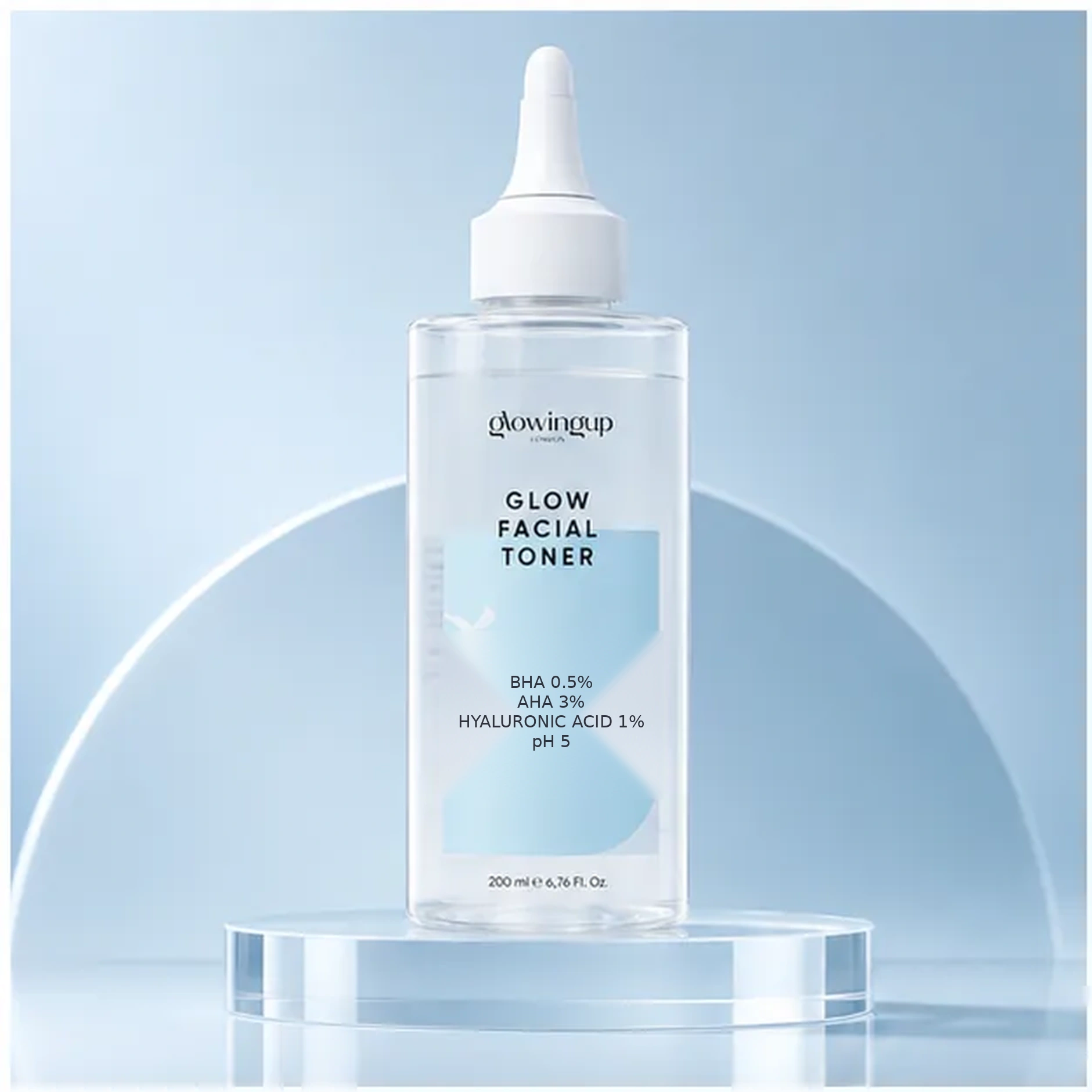
Concept product image; completed product labels, claims and documents must be verified.
Discuss a US wholesale or import enquiry ↗